
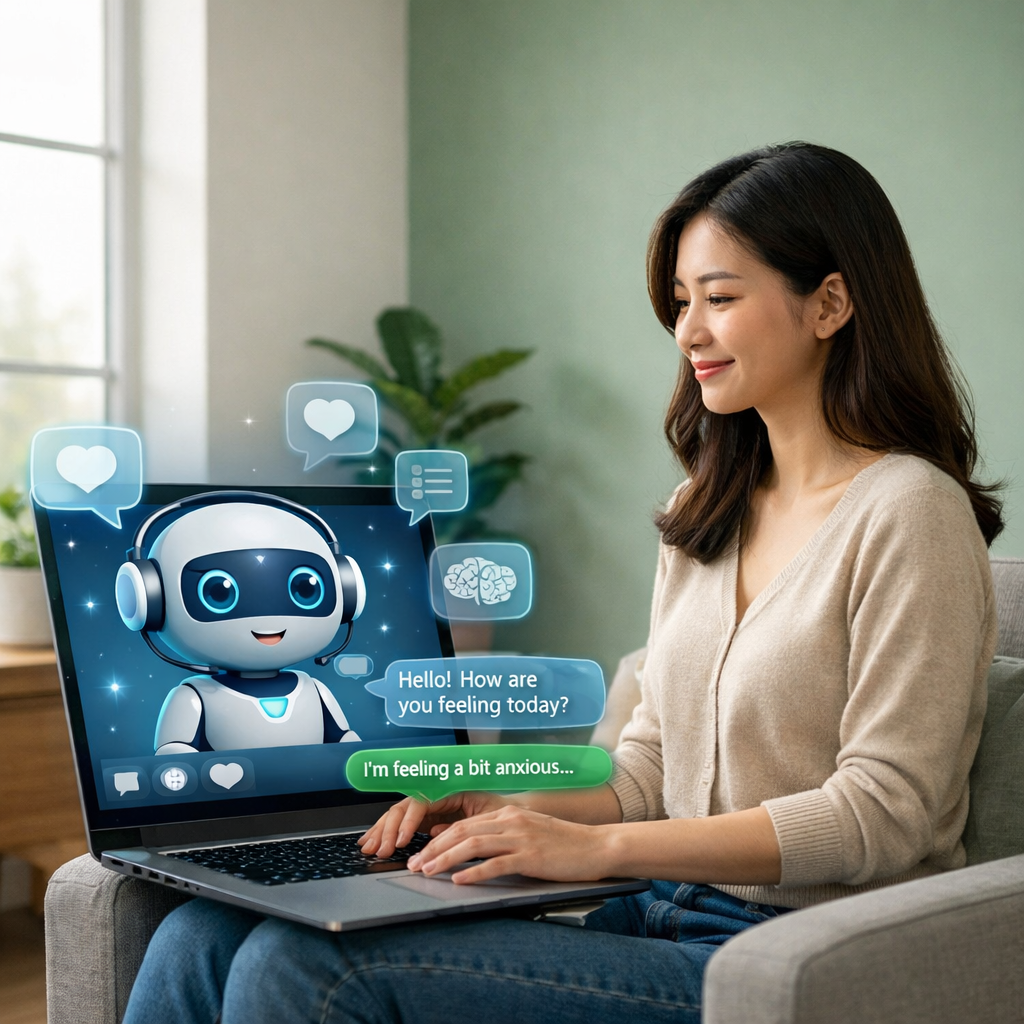
Image created by Microsoft Copilot
Since leaving the tech industry two years ago to become a clinical mental health counselor, I have witnessed progress with developments in AI that are enabling greater productivity, higher value work, and new futures not yet imagined. Microsoft, my last employer before becoming a counselor, speaks of this along with the organizational opportunities and challenges ahead in the 2026 Work Trend Index. While I am not affiliated with Microsoft any longer and my focus has shifted from productivity to mental health and wellness, I see similar developments and questions arising in my counseling room where AI has a role to play.
Uses of AI for Mental Health
Assuming we have created a safe and judgment-free therapeutic relationship, clients may disclose they are turning to AI as an idea generator, researcher, accountability partner, and validator to help them between sessions. As I have learned with my own clients, AI is also assisting them in making decisions about their careers and employment, identify and validate emotional experiences, hold themselves accountable and track progress towards goals, and navigate work, familial, and intimate relationships. These behaviors for interacting with mental health outside of the therapy room are providing new insights to understand, support, and empower clients. However, these behaviors do not come without ambiguity, complexity, or risk, and these are areas of clinical concern and training for fellow therapists.
Clinical Risks and Responses
As jobs are impacted by the rise in use of AI, there is naturally a range of curiosities, anxieties, and fear among clinicians and clients alike about how AI will change their lives. The direct impact on clinicians may equally impact how we may respond to clients who disclose they use AI. We may worry about what AI is advising a client to do that could create harm and may respond with protection and encouragement to reduce use or reliance on AI. We may feel anxious about overreliance on technology to help clients reduce suffering and the reduction of human contact and connection so defend human value over assistive technology. We may also face concerns about being displaced by AI and becoming irrelevant so may unintentionally respond with fear, anger, or judgment. These are very real concerns and worth examining what can be done to address them.
Building AI Knowledge, Skills, and Competence
As a recent clinical mental health counseling graduate, I can attest to having exposure to the growing prevalence of AI usage in the counseling field and an opportunity for clinical training to catch up on how to engage with clients and their AI use for mental health in clinical spaces. Coming from the tech industry where I built and promoted technology solutions and managed and supported teams who created new personal and organizational value, I tend to see it is important as a counselor to navigate this ambiguity by educating, empowering, and advocating for clients to become discerning users and consumers of AI in support of their mental health goals and concerns. They may use it anyway, so shouldn’t we do everything we can to expand the conversation?
Advocacy for Responsible Use of AI
For as long as I was in the tech industry, I have been an advocate for responsible use of technology and empowering users, now clients, to help themselves and seek help when needed. A part of my approach in supporting clients is helping them learn to trust themselves and finding their ideal balance of reliance on self versus others. Clients are still the authors and experts of their lives, and clinicians continue to remain the trained and empathic instrument of change. AI can be an enabler in the therapeutic process if used thoughtfully and as indicated by one’s clinician. Exploring a client’s curiosity, goals, intent, and interpretation of what AI provides them can offer clinicians valuable information to enable treatment and accelerate progress.
Incorporating AI Into Clinical Work
There are opportunities to reimagine how we live and work, and there are hurdles within us and around us to get there. AI is not the only answer in mental health but can assist clients and clinicians alike by helping us reimagine what is possible and support the achievement of mental health goals. Reimagining how we live and work starts with what we see is possible for ourselves, our relationships, and our workplaces. Oftentimes we don’t invent or reinvent anything unless there is a problem to solve or notice the current solution no longer serves us. Client use of AI to support mental health needs is telling us something. As a starting place, here are some curious questions I would pose to get the conversation started:
What is client use of AI telling you if you are a counselor?
What might you be seeking from AI if you are a past, current, or potential client?
How might you broach the subject if you are a counselor or a client?
And how might your therapeutic work fundamentally shift if AI is at least discussed if not also a core part of the work?
What protections, safety plans, and other measures might need to be put in place to do no harm and do good overall for society?
What might we need to demand as clinicians and clients of the makers of AI solutions to ensure user safety and minimize unintentional harm or the effects of bad actors?
Transformation Includes Holding Opposing Ideas at Once
Creating durable change necessarily demands that we navigate the tension between the old and the new. It requires us to hold both things at once to clarify where we are now and where we are heading to map our path. If clinicians accept (and expect) clients are likely to turn to AI once in a while, if not more often, and for all kinds of use cases in life and work including mental health, we have more choices with what we can accept and what we can change. We can respond with protection, caution, and fear, or we can respond with empathy, curiosity, kindness. Microsoft’s 2026 Work Trend Index inspired me to think of AI as a collaborator to support clients’ goals and needs while remaining mindful and explicit of the benefits and risks, practical implications, and role of advocacy in the counseling profession.
Reinvention of Mental Health Care with AI as a Collaborator
This also begs the question of how collaborating with AI may redefine my work as a clinical mental health counselor. I will always need to operate within the laws of my state, ethics of the counseling profession, and scope of practice and competency. I may also be enabled to do higher value work with clients, which, to me, means creating more time and space for reflection, healing, and growth. Clients may become more engaged with the work, try more experiments between sessions, act in alignment with their values, work towards their therapy goals, and integrate what they have tried and learned into who they are becoming. I wonder what kind of transformation we may enable as clinicians with an abundance mindset. Psychoeducation with informed use of AI can start with informed consent, deepen during intake and early work, and evolve throughout the therapeutic process. I especially wonder how clients may go from a mindset of incremental change to transformation into wellness if they feel understood and supported as they already use AI alongside their therapeutic work.