
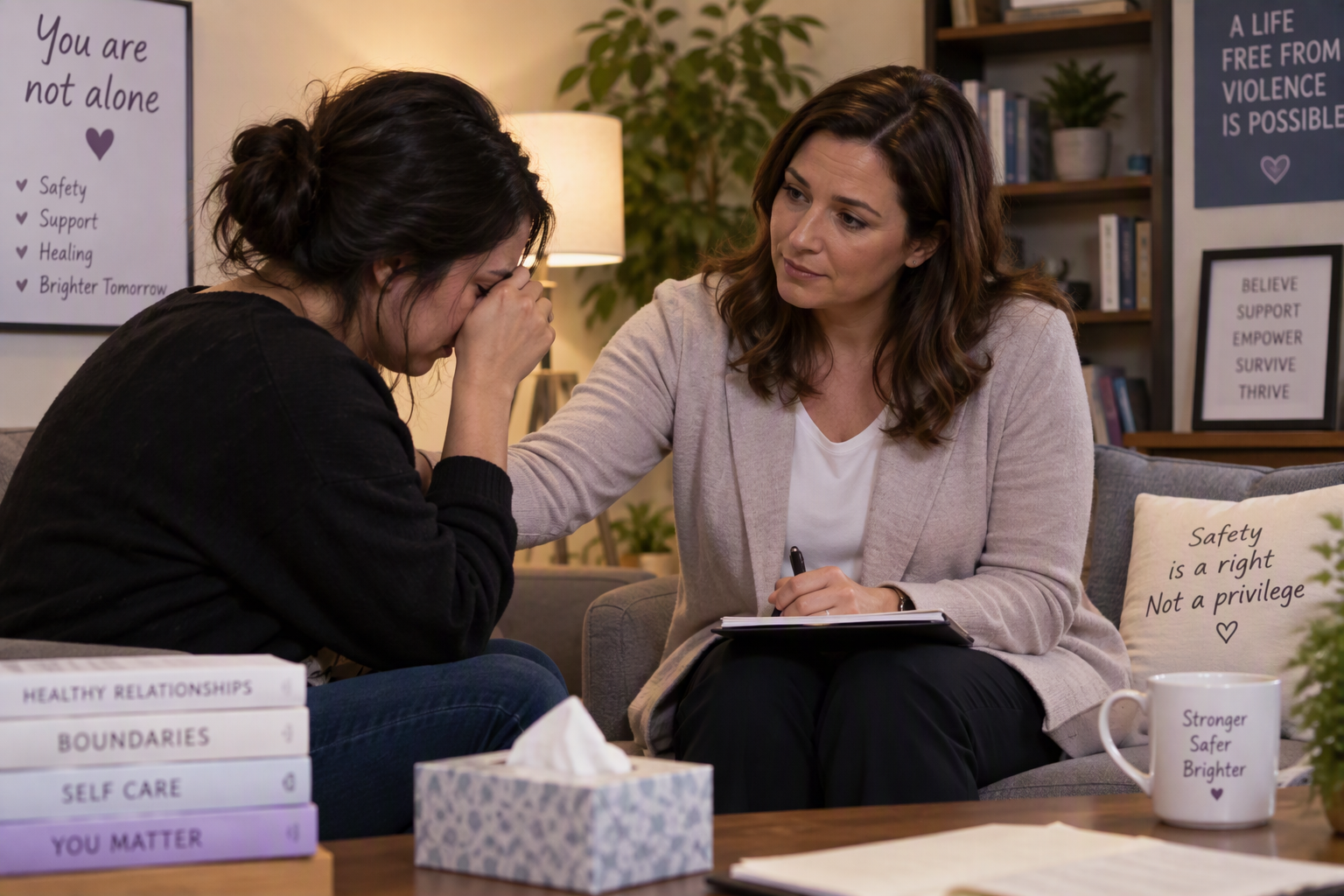
Image created by Microsoft Copilot
Conceptualizing intimate partner violence (IPV) by mental health professionals can be complex and confusing as client and partner presentations may not all look and sound alike. Individual, relational, cultural, and societal factors are all present in what manifests or not in the therapy room. This includes what is talked about to what experiences, worldviews, beliefs, and relational dynamics may be present but not spoken. When you add stigma, shame, and suffering frequently present in the IPV dynamic to the mix, identifying the presence of IPV and who may create or receive harm, or both, may be very difficult.
Identification of IPV
Listening attentively, attuning to the client and their process, looking for harm, reflecting what is spoken to seek understanding, and surfacing what is unspoken to promote awareness, insight, and healing are key parts of the therapeutic process. Just as we may listen for potential harm towards oneself or others that may end in unintentional or intentional death, therapists may hear or sense IPV is occurring for a client, whether they are receiving or creating harm or both. What we do with this knowledge and felt sense is crucial. It can save a life and change the trajectory for a client, partners, and families.
Limits of Mandated Reporting Related to IPV
Mandated reporting focuses on vulnerable youth and older adults as well as threats to one’s life. There is not a requirement to report incidents of domestic or intimate partner violence. However, the effects of physical, sexual, and psychological harm such as intimidation, threats, or verbal, emotional, or financial abuse can be long lasting. A loss of sense of self, physical concerns like cardiac or gastrointestinal distress, or occupational and social losses can arise from long-term intimate partner violence, among other concerns.
As mental health professionals, we all have a responsibility to protect and enable the safety of our clients and their partners, and we can feel anxious, stuck, or fearful about how to navigate what we’re hearing or bring up what we’re noticing. This blog post offers ideas on what to consider, use as treatment modalities, and support we may need for ourselves.
Legal Considerations
In Washington state, it is a crime to physically or sexually harm one’s partner, but it is not a crime to psychologically harm one’s partner. There are protections that can be taken in the legal system to create safety, such as restraining orders for more severe incidents of physical or sexual harm or stalking. Gavin de Becker, author of The Gift of Fear, points out these measures are reactive and may not ultimately stop someone from creating harm who intends to carry it out. This should not stop us as professionals from getting curious or encouraging clients to consider various options.
Ethical Considerations
This brings us back to our mandated reporter duty where we need to take acts of coercive control seriously as they can escalate over time and lead to imminent risk to someone’s life. We may have an ethical dilemma present as not every client or partner may want to separate despite what is happening. Ethical principles of autonomy that enable client choice and nonmaleficence of doing no harm may be in tension. If this is the case, use of an ethical decision-making model and additional support from clinical supervision and consultation can help us support our clients in making the best choice for them and not imposing our values on our clients.
Conceptualization
Not every client identifies with the terminology of domestic violence or intimate partner violence. Some clients may understand the terms but may not find them relatable as they are not yet aware they are caught in cycles of power and control. Other clients may experience disbelief a single act or ongoing IPV could happen to them. For these clients, they may benefit more from learning about cycles of power and control and use of the term “high conflict” to develop awareness, insight, and action before moving into terms like coercive control, abuse, or intimate partner violence. Starting with the client’s sense of their experience is the first step as they are the expert of their lives.
Cultural Humility
Understanding what is happening for a client or partners starts with exploring the experiences, worldviews, beliefs, and relational dynamics from their lens that created and maintain a cycle of power and control. Whether working with an individual client or partners, identifying historical experiences with caregivers and prior intimate partners that include instances of physical, sexual, and/or psychological harm can surface what has been normalized and the potential presence or risk of power and control reenacted in one’s current intimate relationship. Also, understanding if acts of violence are permissible in one’s culture can ensure we are adequately conceptualizing a client’s experience and what feels harmful to them or not.
Assessment
To aid with conceptualization, we can invite clients to assess their past and current experiences, risks, and impact of intimate partner violence. One such gender-inclusive assessment for creation of harm is the Controlling and Abusive Tactics (CAT-2) Questionnaire developed by Hamel et al. in 2015. The CAT-2 has four sub-scales that identifies the presence of harm towards one’s partner, including derogation and control, jealous hypervigilance, threats/control of space, and sexual derogation. Another assessment to gauge receipt of harm is the Danger Assessment developed by Jacquelyn C. Campbell, PhD, RN in 2004 for a female receiving harm from a male partner or Danger Assessment -Revised in 2007 for a female receiving harm from a female partner.
There is an opportunity to broaden intimate partner violence assessments to be more inclusive of gender and sexual identity differences, but these assessments could provide a start to facilitate awareness and insight for a client or partners navigating very difficult and painful circumstances.
Treatment
Many partners may love each other and prefer to stay together but have run out of skills and resources when they feel stressed, anxious, fearful, or distressed. According to Alan Fruzzetti, PhD, in his book The High-Conflict Couple, clients and partners may benefit from Dialectical Behavior Therapy to reduce distress and stay connected. Russ Harris also suggests Acceptance and Commitment Therapy in his book ACT with Love to enable committed action in accordance with each partner’s values. Other partners may benefit from separation, divorce, or discernment counseling to determine the best path forward to not only interrupt but end the cycle of harm.
Treatment is a Journey
Partners may not know what they need when they arrive, but they may know what they want to change. Sometimes clients may enter wanting to dissolve the relationship and end up reconciling. Other times they may come in wanting to repair and end up wanting to separate. As therapists, it is our job to figure out their capacity, motivation, and commitment for change, which can fluctuate along the way. Even if only one partner comes to individual therapy, a cycle can be interrupted if one partner can make a sustainable change and another partner is responsive to it. We are here for the journey, and sometimes that means updating client goals and treatment plans accordingly.
Support for Professionals
Working with intimate partner violence can be very challenging. It could bring up vicarious trauma, compassion fatigue, and burnout. Stories may remind us of our own experiences with violence, and we may need our own therapeutic support to heal. It is our professional responsibility to understand if we have the appropriate scope of practice and competence to serve client needs before entering the therapeutic relationship and refer out if their needs are out of our scope of competence.
Sometimes these stories begin to unfold after building the therapeutic relationship and we find ourselves not knowing what to do. Once the work begins, it is also our ethical duty to continue supporting clients, and we can seek training, supervision, and consultation for cases to close gaps in knowledge and experience. Treating ourselves with tenderness and having a mechanism for metabolizing what we see and hear is important in this work as it can be challenging to provide the emotional container without an outlet for ourselves. Developing and maintaining a self-reflective practice is just as important as building a self-care routine. To care for others, we must also care for ourselves.
Coming Up in Week Four
The fourth and final post on IPV will culminate in some thoughts and recommendations for family and friends who provide support for individuals and partners experiencing IPV. While family and friends are not expected to act as professionals, they are often more exposed to instances of IPV than professionals as they are a part of the everyday lives of those caught in these cycles. It can be challenging and painful to witness the cycle and suffering of our loved ones. We will explore what family and friends may notice, how they can help, and how they can get support for themselves.